

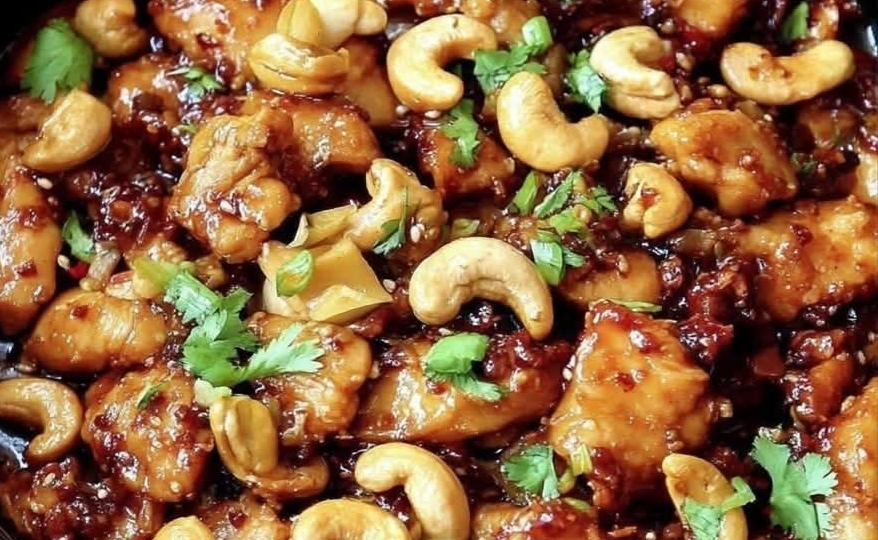
Slow Cooker Cashew Chicken
Cashew chicken sits at the top of most takeout orders for a very good reason: the combination of tender chicken, a savory-sweet soy and hoisin sauce, crisp vegetables, and buttery roasted cashews hits every note you want from a satisfying meal. The problem with ordering it regularly is cost, wait time, and the nagging awareness that restaurant versions are often heavier on sodium and oil than they need to be. This slow cooker version solves all of that. You get the same rich, deeply flavored result — juicy chicken saturated with sauce, crunchy cashews, colorful vegetables — with almost no active cooking time and full control over every ingredient that goes in.
The slow cooker is particularly well-suited to this dish. The long, gentle heat breaks down the chicken to a point of tenderness that’s difficult to achieve on a stovetop without overcooking the exterior, and the sauce concentrates and deepens over the hours in a way that makes it cling to every piece of chicken rather than sitting thin and watery in the pot. Come home to it after a full day and dinner is already done — just add the cashews and vegetables at the end, serve over rice, and you have a meal that genuinely competes with anything you’d order from a restaurant.
Why the Slow Cooker Works So Well Here
The biggest advantage of the slow cooker method for cashew chicken is what it does to the sauce. A sauce built from soy, hoisin, rice vinegar, garlic, and ginger tastes sharp and bright at the start of cooking. After 3 to 4 hours at a low, steady temperature, those sharp edges soften and the flavors meld into something more cohesive and rounded — the garlic becomes sweeter and more mellow, the hoisin deepens, the sweetness from the brown sugar or honey integrates fully rather than sitting on top. The chicken absorbs all of this as it cooks, resulting in pieces that are flavored all the way through rather than just coated on the surface.
The hands-off nature is the other major advantage. There’s no standing at the wok, managing high heat, timing multiple elements simultaneously. You make the sauce, add the chicken, set the cooker, and walk away. The most active part of the process is adding the vegetables and cashews in the final 30 minutes — which takes about two minutes to do.
Ingredient Notes
Chicken — Thighs are the preferred cut for slow cooker dishes. They have more fat and connective tissue than breasts, which means they stay moist and tender through long cooking rather than drying out. The fat also contributes richness to the sauce as it renders during cooking. Boneless, skinless thighs are the most convenient. Chicken breasts can be used for a leaner result, but they need careful attention to cooking time — breasts become dry and stringy if overcooked in the slow cooker, so check them at the lower end of the cooking window. Cut whichever you use into uniform bite-sized pieces, around 1 to 1.5 inches, for even cooking.
Cornstarch coating — Tossing the chicken pieces in a light coating of cornstarch before searing or adding them to the slow cooker is optional but worth doing. The cornstarch creates a very thin coating that helps the chicken hold its shape through the long cook, contributes to the sauce thickening around the chicken, and adds a slightly more substantial texture to each piece. If you sear the coated chicken in a hot skillet before adding it to the slow cooker, you also develop color and flavor through the Maillard reaction that the slow cooker alone cannot create.
Soy sauce is the backbone of the sauce — it provides saltiness and a deep umami quality that anchors everything else. Regular soy sauce produces a robust result; low-sodium soy sauce gives you more control and is recommended if you’re sensitive to salt. For a gluten-free version, tamari or coconut aminos substitute directly with minimal flavor difference.
Hoisin sauce adds sweetness, depth, and a slightly complex fermented quality that’s distinct from anything else. It’s an important component of what makes this taste specifically like cashew chicken rather than a generic Asian-style sauce. Most grocery stores carry it in the international foods aisle; it keeps well in the refrigerator for months after opening.
Rice vinegar provides the slight acidity that balances the richness of the soy and hoisin. It’s mild enough not to make the sauce taste sour, but its presence prevents the sauce from feeling flat or one-dimensional. Apple cider vinegar can substitute in a pinch, but rice vinegar is the cleaner, more appropriate choice.